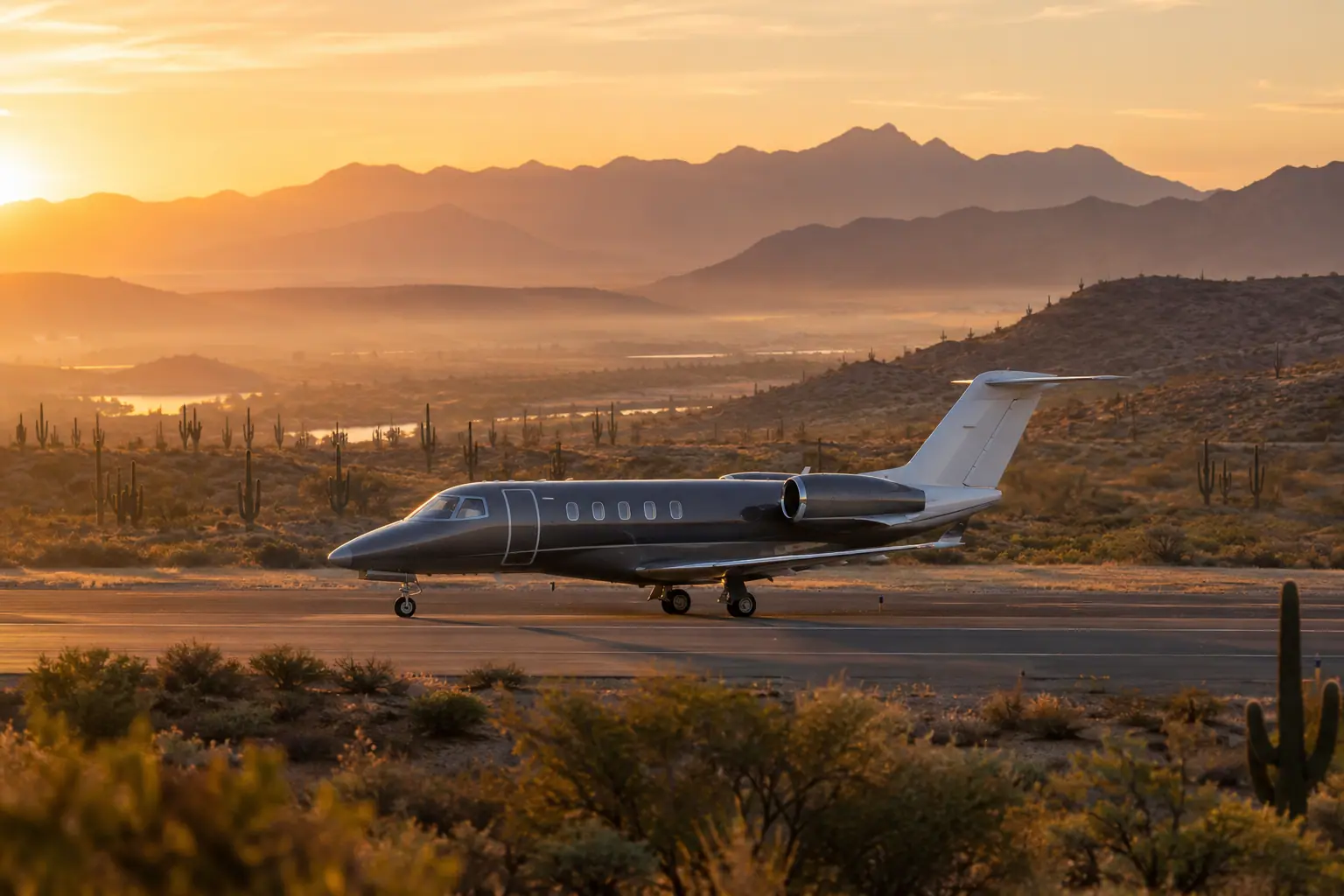
Private jet San Francisco to Phoenix
A private jet San Francisco to Phoenix covers 565 nautical miles, roughly 650 statute miles. A light jet makes the trip in about 1 hour 41 minutes nonstop. What changes your day is which Phoenix airport you land at.
- 565 nm650 statute miles
- 1h 41mlight jet flight time
- $6,500–$9,500one-way estimate
San Francisco to Phoenix charter rates by aircraft
A private jet from San Francisco to Phoenix travels 565 nautical miles in 1h 41m aboard a light jet, with a one-way estimate of $6,500–$9,500.The numbers below reflect one-way estimates for the Bay Area to Phoenix run. Times are block times, meaning the moment the brakes release until the aircraft comes to a stop at the destination. Prices are estimates and vary with aircraft availability, crew positioning, and the day you fly. Use the range as a planning baseline, then request a quote.
| Aircraft class | Flight time | One-way estimate | Notes |
|---|---|---|---|
| Turboprop | 2h 17m | $5,000–$8,000 | Nonstop |
| Light jet | 1h 41m | $6,500–$9,500 | Best fit |
| Midsize jet | 1h 39m | $8,500–$13,000 | Nonstop |
| Super-midsize jet | 1h 34m | $11,000–$15,500 | Nonstop |
| Heavy jet | 1h 34m | $15,000–$22,500 | Nonstop |
Estimates are per aircraft, not per seat, excluding federal excise tax and segment fees. Duration covers taxi, climb and descent.
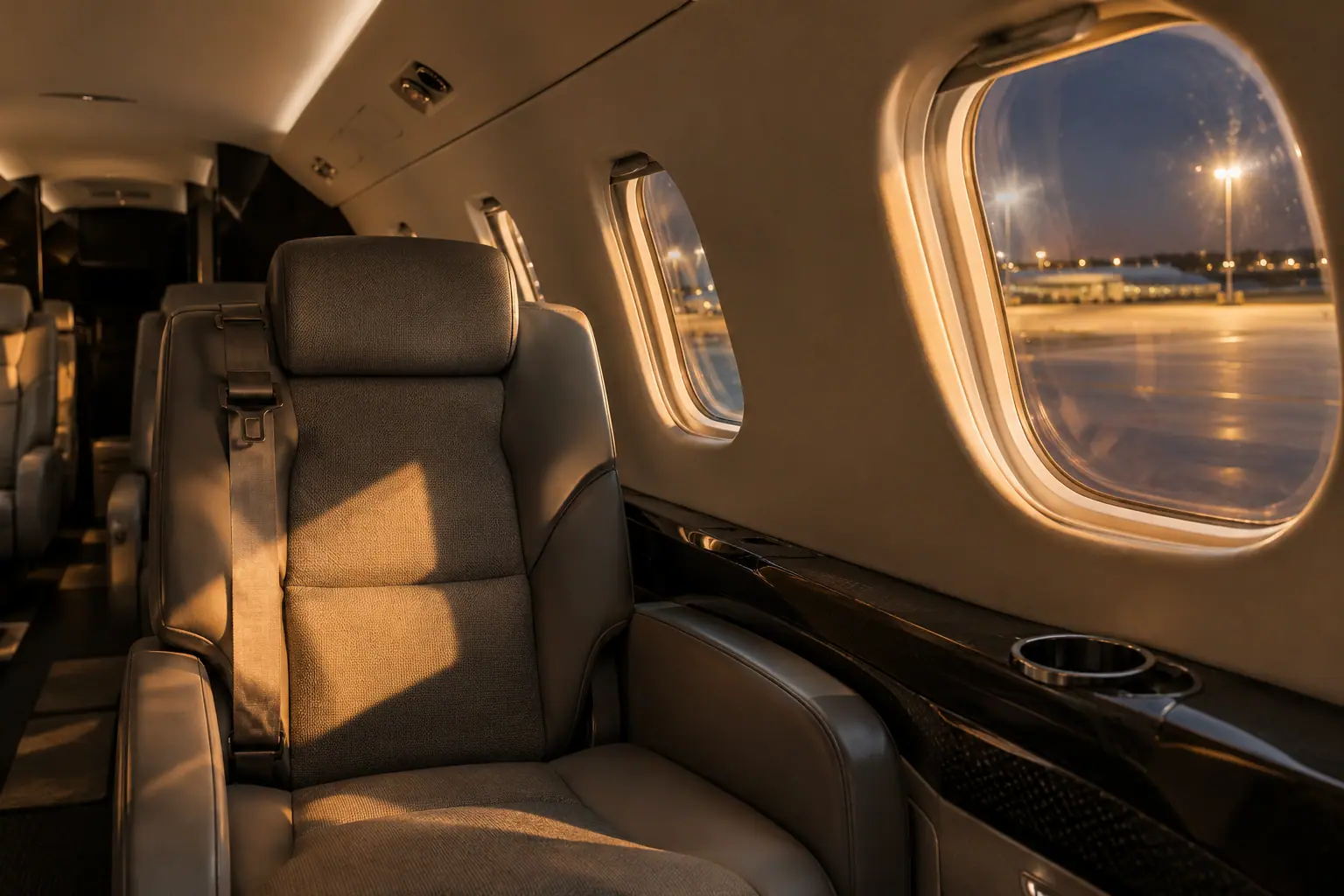
Why a light jet fits this trip
The light jet fits this route almost too well. A Cessna Citation CJ4 Gen2 carries seven passengers at 451 knots and covers 2,165 nautical miles, so the 565-mile run is a short and comfortable leg. A HondaJet Elite II seats five at 422 knots, plenty for a couple heading to a Scottsdale resort. Neither aircraft works hard on this distance, so you are paying for cabin comfort, not range.
A turboprop comes in lower on price but adds nearly forty minutes in the air and a noisier cabin. Midsize and super-midsize jets add stand-up space and a proper galley if you are traveling with a group of eight or more. For two to six passengers, book a light jet and put the savings toward the ground transfer.
HondaJet Elite II
- 5 seats
- 422 kt cruise
- 1,550 nm range
Cabin 4 ft 10 in tall, 17 ft 9 in long, luggage 66 cu ft.
Cessna Citation CJ4 Gen2
- 7 seats
- 451 kt cruise
- 2,165 nm range
Cabin 4 ft 9 in tall, 17 ft 4 in long, luggage 71 cu ft.
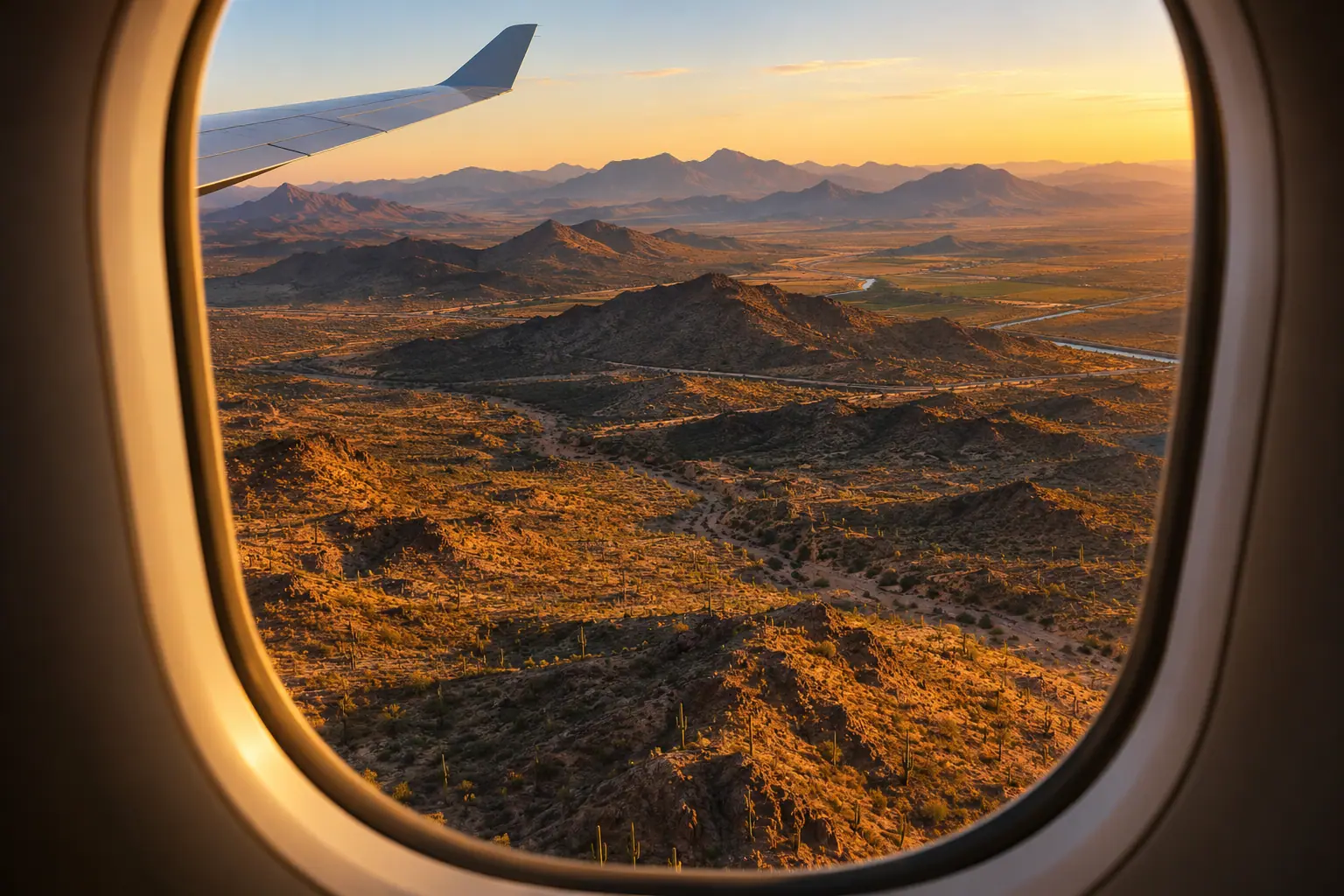
Leaving the Bay Area
Most private jet San Francisco departures use either KSFO or Oakland's KOAK, and your operator picks based on ramp space, noise rules, and where the crew is based. The 11,870-foot runway at San Francisco International handles any light jet with room to spare. If you live on the Peninsula, SFO is usually the shorter drive; if you are coming from the East Bay, Oakland saves you the bridge and the traffic.
The Bay Area's morning marine layer can delay VFR departures, so pilots file IFR into Phoenix as a rule. Operators will often schedule an earlier slot to stay ahead of the fog. Ask who provides the ground transfer on the San Francisco end; some operators include it in the quote, and some do not.
Arriving into Phoenix
Phoenix Sky Harbor and Scottsdale Airport handle most of the private jet traffic from San Francisco, and each one drops you into a different part of town. Sky Harbor's 11,489-foot runway suits every class on this route, and the FBO ramp puts you a short drive from downtown and the Camelback corridor. Scottsdale's 8,249-foot runway sits minutes from Old Town, Kierland, and the resort strip along Scottsdale Road.
Glendale Municipal and Deer Valley sit on the northwest side, closer to Peoria and the West Valley than to Phoenix's core. Glendale's 7,150-foot runway is the shortest of the four, so midsize and heavier jets may not find it suitable. Deer Valley's 8,196 feet handles most light and midsize aircraft. Give your operator the hotel address before they file, because the airport choice affects both your drive and the fee.
| Airport | Code | Runway |
|---|---|---|
| San Francisco International Airport | KSFO / SFO | 11,870 ft |
| Oakland San Francisco Bay Airport | KOAK / OAK | 10,520 ft |
| Phoenix Sky Harbor International Airport | KPHX / PHX | 11,489 ft |
| Glendale Municipal Airport | KGEU | 7,150 ft |
| Scottsdale Airport | KSDL / SCF | 8,249 ft |
| Phoenix Deer Valley Airport | KDVT / DVT | 8,196 ft |
When to book this route
Demand peaks around the Phoenix Open in late January and February, and again through spring training and the winter visitor season. Rates for a light jet on the San Francisco to Phoenix leg tend to sit at the top of the range in those weeks. If your trip falls on a Thursday or Sunday during that stretch, book seven to ten days out rather than three.
Summer afternoons bring heat and thunderstorms to Phoenix, so morning arrivals are more reliable and easier to schedule. If you are returning to the Bay Area on the same day, ask whether the aircraft waits or repositions; either can be arranged, but the price differs. Empty legs, where an operator needs to move a jet back to its base, are worth asking about, since they appear on this route occasionally and often price below a standard one-way estimate. Under federal rules, the charter broker acts as your agent and the operator holds operational control, so the contract you sign names the company actually flying.
Other private routes like San Francisco to Phoenix
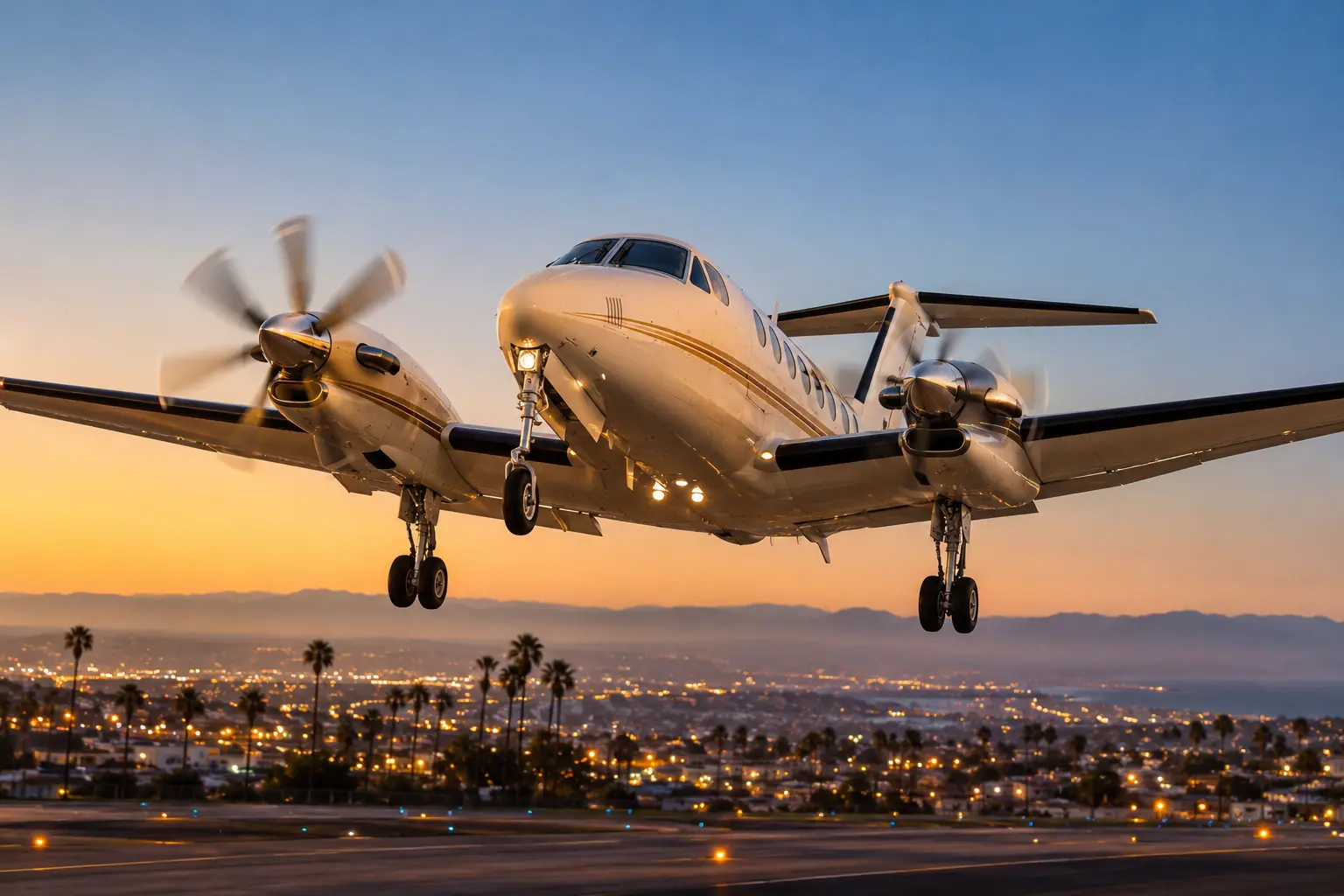
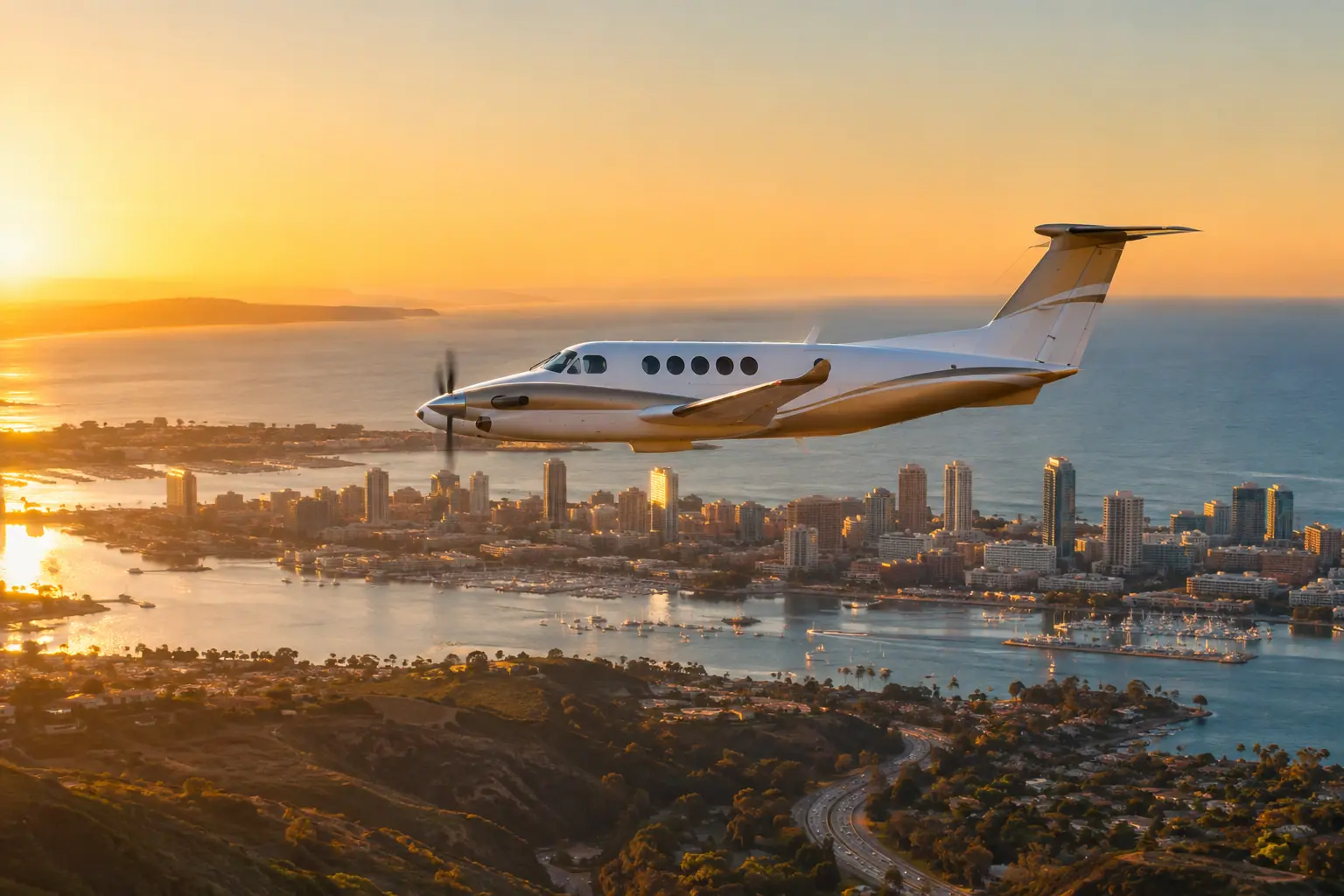
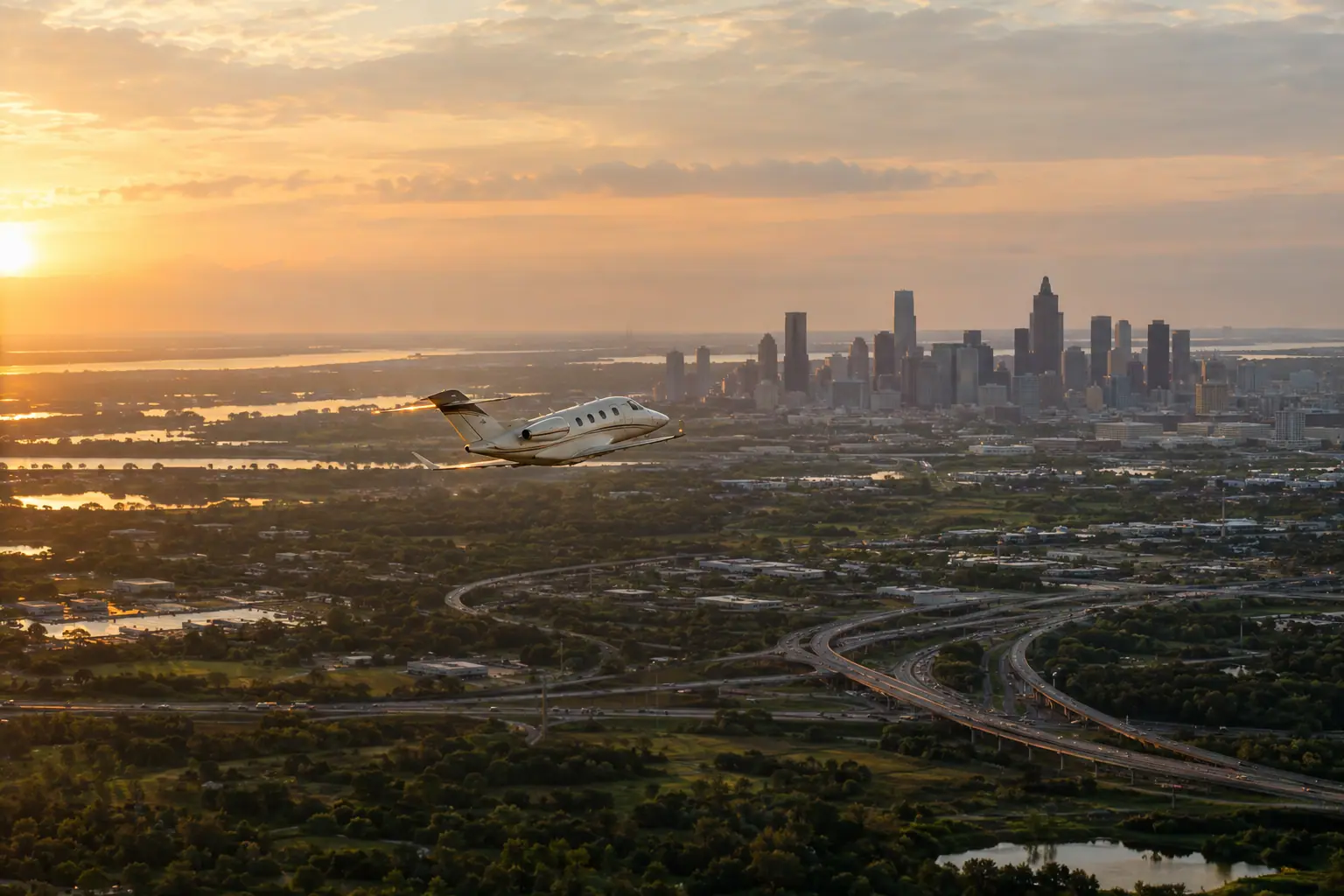
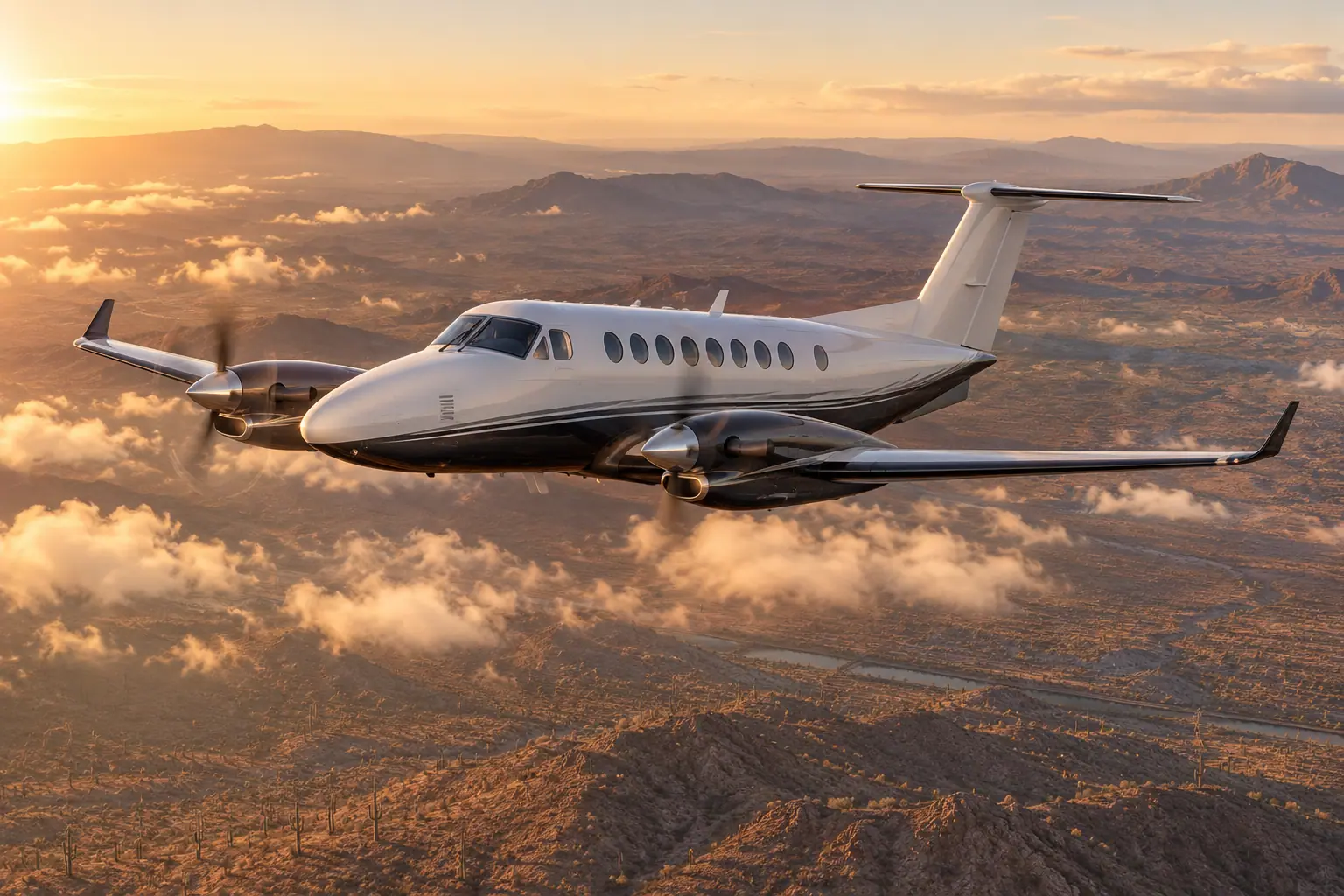
These 6 private jet city pairs span 222 to 885 nautical miles, with single-leg light jet estimates from $4,000 to $14,500.
Inquiries on this leg
How long is a private jet San Francisco to Phoenix flight?
A light jet makes the trip in about 1 hour 41 minutes nonstop, and a midsize jet trims that to roughly 1 hour 39 minutes. The distance is 565 nautical miles, or about 650 statute miles. Heavy and super-midsize jets fly the leg in about 1 hour 34 minutes. Door to door, add your drive to the airport, a short ramp process, and the ride into Phoenix, and you can usually be at a Scottsdale resort in about four hours total.
What does a private charter from San Francisco to Phoenix cost?
Light jet estimates run from $6,500 to $9,500 one way, and that is the class most travelers choose for this distance. Midsize runs $8,500 to $13,000, super-midsize $11,000 to $15,500, and heavy jets $15,000 to $22,500. A turboprop comes in at $5,000 to $8,000 but takes about 2 hours 17 minutes. All figures are estimates; crew time, airport fees, and peak-week demand move the final quote.
Which Phoenix airport will my jet land at?
That depends on where you are staying. Phoenix Sky Harbor has an 11,489-foot runway and is the most versatile for any class. Scottsdale Airport has 8,249 feet and is the closest to Old Town and the resort corridor. Deer Valley gives you 8,196 feet on the north side, and Glendale Municipal has 7,150 feet, which limits some larger jets. Share your destination address and your operator will match the airport to your day.
Can I fly San Francisco to Phoenix and back in one day?
Yes, and on this route it is practical. The flight is about 1 hour 41 minutes each way in a light jet, so a morning departure and an evening return leave a full working day in Phoenix. Same-day round trips usually mean paying for the aircraft to wait, which can cost more than two separate one-ways. Ask your broker to price both before you commit; the difference can be meaningful on a 565-mile leg.
How does charter compare with flying commercial or driving?
Commercial service between the Bay Area and Phoenix is frequent but adds security lines and terminal time at both ends. Driving the roughly 650 miles takes most of a day. A charter trims the airport process to a short ramp walk at each end and lands you at an airport chosen for your destination. For a two- or three-day trip, the time saved on the ground often outweighs the price gap.
Who operates the aircraft and who handles my booking?
The flight is flown by an FAA Part 135 operator that holds operational control of the aircraft and crew. The charter broker arranges the trip as your agent, and DOT Part 295 rules govern how that relationship works. Your quote and contract should name the operator flying your leg. For domestic flights like this one, TSA screening at private terminals is generally lighter than at commercial concourses, though each FBO sets its own procedure.